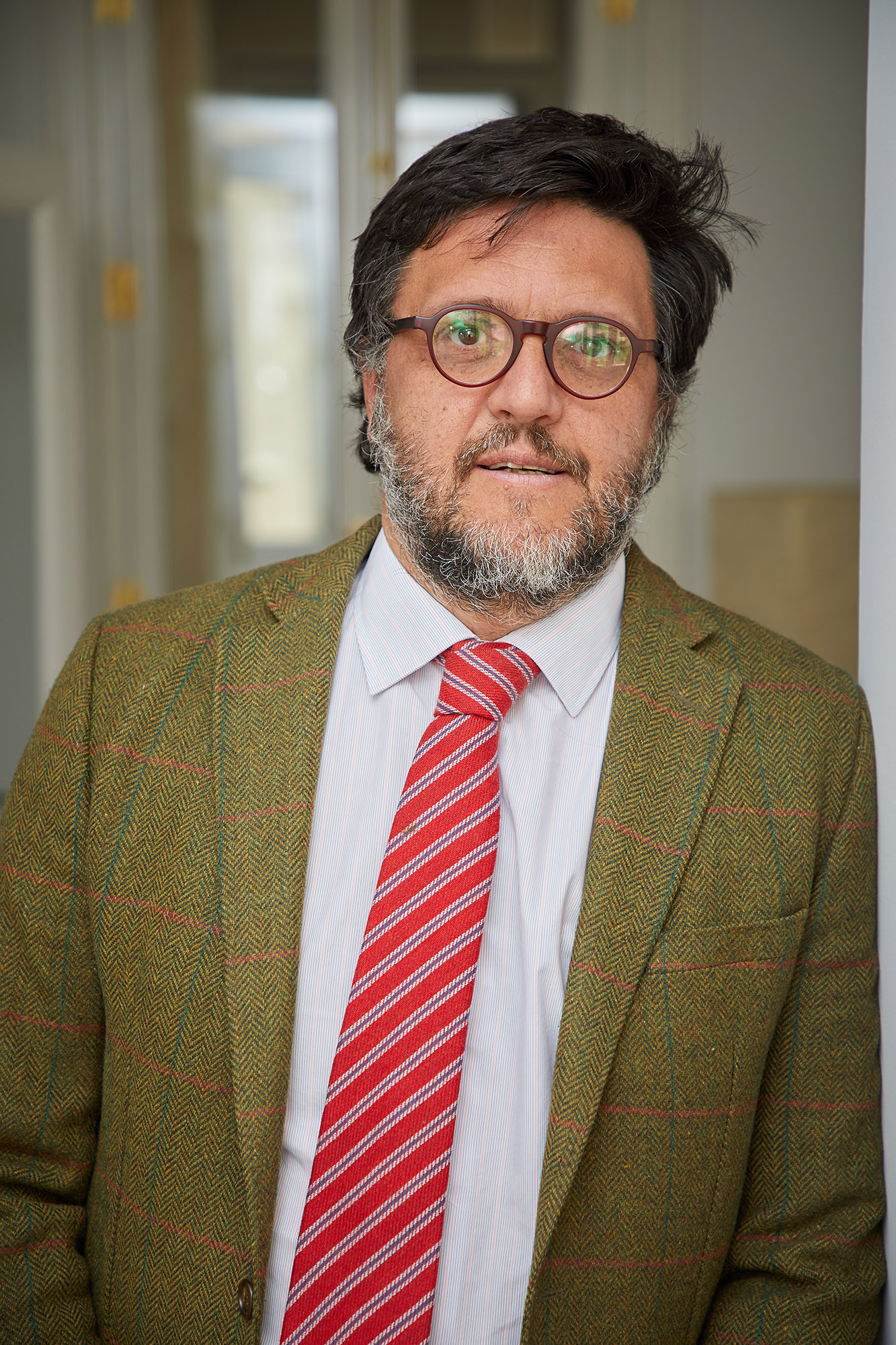
 Rafael Rubio Núñez holds a PhD in Constitutional Law (Extraordinary Doctorate Award) and is a Full Professor with more than 25 years of teaching experience at the Complutense University of Madrid, where he directs the Research Group on Technology and Democracy (i+dem).
He served as Deputy Director of the Centre for Political and Constitutional Studies (2017–2018), Member and Chair of the Transparency and Participation Commission of the Madrid Regional Government (2020–2024), and member of the Open Government Forum of the Government of Spain (2018–2025).
He also served as Alternate Member of the European Commission for Democracy through Law (2018–2024), better known as the Venice Commission, the advisory body of the Council of Europe composed of constitutional law experts whose primary mission is to provide assistance on constitutional matters, strengthen democratic institutions, and protect human rights. In this capacity, he acted as legal advisor to the Council of Europe Electoral Observation Mission for the 2019 Ukrainian presidential elections and has participated as an electoral observer in elections held in Brazil, Costa Rica, Colombia, Chile, Argentina, Panama, the Dominican Republic, Ecuador, and Mexico. He was also part of the team responsible for training electoral witnesses from different political parties during Bolivian presidential elections. In addition, he serves on the Academic Committee of the Global Network on Electoral Justice.
He is a member of the Editorial Boards of Revista de Derecho del Estado (Colombia), the Comillas Journal of International Relations (Comillas Pontifical University), Calenda Publishing, and Lex Publishing (Mexico). He currently teaches, or has taught, graduate-level courses at more than thirty universities worldwide, including Georgetown University (USA), the University of Buenos Aires (Argentina), Tecnológico de Monterrey (Mexico), Universidad Panamericana (Mexico), the National University of San Marcos (Peru), the University of Chile, Universidad Externado de Colombia, the Higher School of Public Administration (Colombia), the University of Oriente (Cuba), Spain’s National Institute of Public Administration, the University of Navarra, the Spanish Diplomatic School, Comillas Pontifical University, and the Ortega y Gasset Foundation. He has also been a Visiting Researcher at Georgetown University, Harvard University, George Washington University, Scuola Superiore Sant’Anna, and Dublin City University.
As a consultant, he has advised the Inter-American Development Bank on best practices for the use of technology in Latin American parliaments, the Ministry of Foreign Affairs of Peru, and the Madrid Regional Government on integration policies. He has participated in several expert groups, including those involved in drafting Spain’s Transparency Act (2012) and the expert committee on political reform convened by the Centre for Political and Constitutional Studies (2014).
He has collaborated on issues related to political participation and human rights with numerous non-governmental organizations, including Transparency International, Save the Children, UNICEF, Cooperación Internacional, the Electoral Observation Mission of Colombia (MOE), and Borde Político (Mexico).
His main research interests include technology law, lobbying regulation, transparency, political participation processes, parliamentary law, electoral law, democratic transitions, and the development of democratic institutions in technological environments.
As a researcher, he has participated in numerous national and international research projects, including Electoral Campaigns and Electoral Participation (2004–2007), Freedom of Information in the Context of Web 2.0 and Social Networks (2010–2012), Multilevel Democracy: Citizen and Territorial Participation in Public Decision-Making Processes (2012–2014), Constitutional Legal Framework of Government 2.0 and Open Government (2012–2014), the European project Lifting the Lid on Lobbying (Transparency International and European Commission, 2014), The Advancement of Open Government (2016–2018), Interaction between Representation and Participation in Legislative Production (2016–2018), the Citizen Participation Observatory in the Spanish General State Administration (2018), Evaluation of Participation in the General State Administration (2019), and Safeguards Against Disinformation in Electoral Processes (2020–2022). He is currently Co-Principal Investigator of the research project Institutional and Regulatory Safeguards: Electoral and Digital Oversight Authorities Facing Interference, Hostile Narratives, Targeted Advertising and Polarization (Dir-Politics).
As an author, he has published five monographs, including Artificial Intelligence and Algorithmic Electoral Campaigns (published in Brazil, Spain, and the United States), Consultative Administration as a Mechanism for Citizen Participation (CEPC, 2020), and Lobby Groups (CEPC, 2003). He has also co-authored more than a dozen books, including Participation in the Spanish General State Administration through Digital Means and Open Parliament: Parliament in the 21st Century. Furthermore, he has edited or co-edited eight collective volumes, among them Constitutional Spain: Trajectories and Perspectives (CEPC, 2018).
Among his more than one hundred academic articles and book chapters are notable works such as Sources for the History of Spanish Constitutionalism, Internet and Political Participation (Revista de Estudios Políticos, 2000), Institutional Reform of the European Union: The Road to Legitimacy in Europe (Debates Constitucionales, 1999), Lobby Groups in Spain: A Pending Review (Revista de las Cortes Generales, 2002), Transparency in Political Parties (Tiempo de Paz, 2014), Lobbying Before the Executive Branch: A Legal Response Beyond Registration (Teoría y Realidad Constitucional, 2017), Open Parliament in Spain (Revista General de Derecho Constitucional, 2017), The Crisis and Its Challenges for Democracy: Towards a New Political and Social Contract? (Estudios de Deusto, 2018), and The Effects of Post-Truth on Democracy (Revista de Derecho Político, 2018).
Among other distinctions, he has been awarded the Cross of the Order of Saint Raymond of Peñafort, granted to distinguished figures in the fields of legal scholarship and the administration of justice. He is also Commander with Plaque of the Order of Saint Sylvester, awarded by the Vatican City State. In addition, he is a Corresponding Member of the Royal Academy of Jurisprudence and Legislation, the Institute of Parliamentary Law, and the Más Democracia Association.