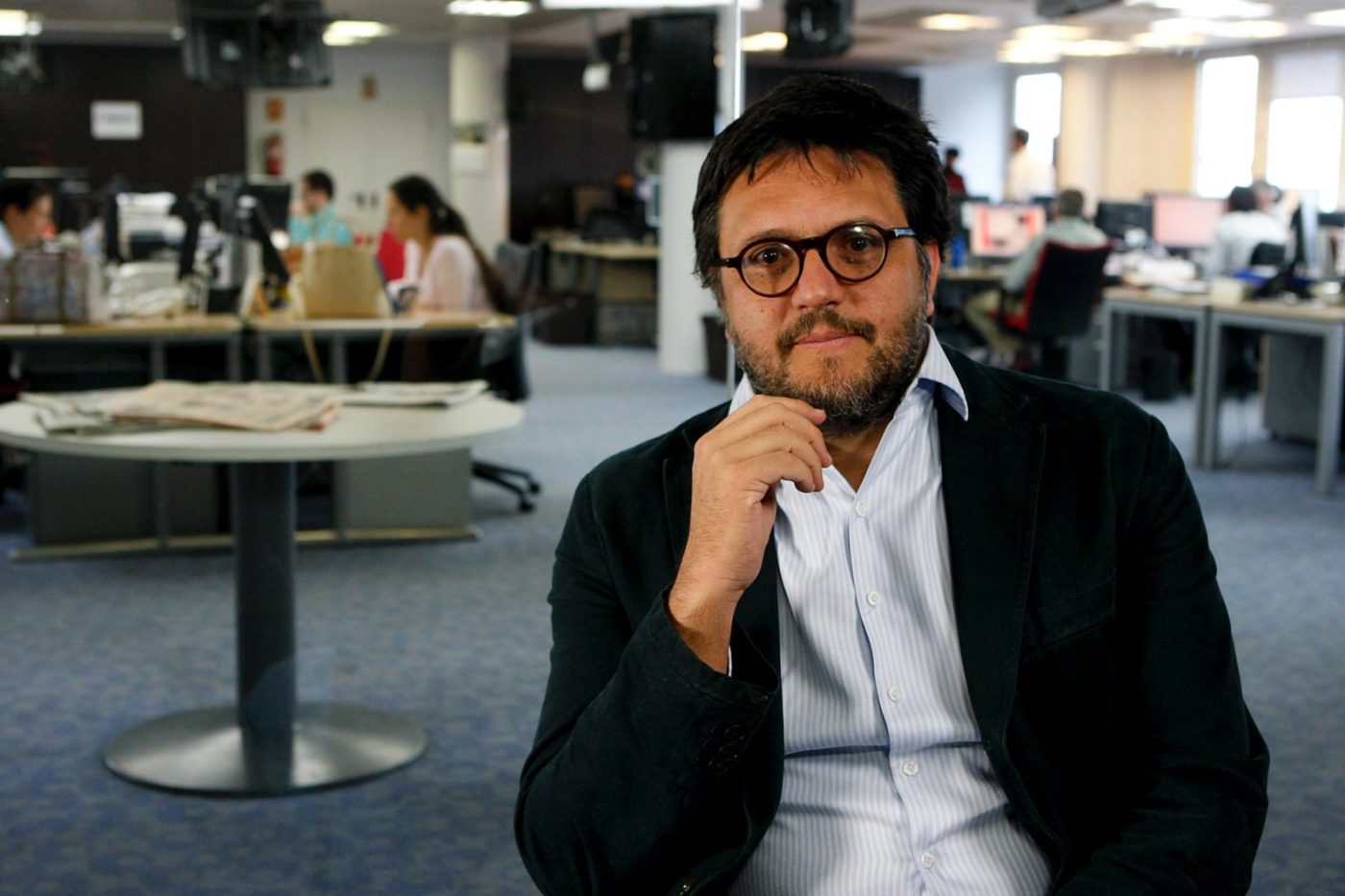
Rafael Rubio is a Full Professor and Head of the Technology and Democracy Research group at Complutense University of Madrid. He holds PhD in Constitutional Law (with an Extraordinary Doctorate Award) from Complutense University.
Member of the Academic Committee of the Global Network on Electoral Justice (2016-). Election observer in Mexico, Ecuador, Colombia, Brasil, Perú, Panamá, Dominican Republic, Argentina and Costa Rica. Has served as legal advisor to the ODIHR/OSCE EOM in Ukraine and as head of mission of the EOM on disinformation for the presidential elections in Brazil. Has also appeared as an expert on disinformation and electoral campaigns before various committees of the Spanish Congress of Deputies, the European Parliament and the electoral bodies of Mexico, Peru and Costa Rica. Technical assistant for the EMBs in Dominican Republic (JCE, 2024), Panama (Electoral Court 2024), Perú (JNE 2026) and Colombia (Registraduria Nacional de la Republica, 2026), As a member of the Venice Commission, participated as rapporteur in the preparation of four reports on the use of technology in democracy, and served as rapporteur at the Council of Europe Congress on Artificial Intelligence and Elections. Has advised Latin American Parliaments and Electoral Courts as well as the Inter-American Development Bank, the Peruvian Ministry of Foreign Affairs, the United Nations and the European Commission on technology and democracy issues.
Has been director of the Complutense Research Group on Technology and Democracy (2005-2021); deputy director of the Centre for Political and Constitutional Studies (2017/18); substitute member of the Venice Commission; (2018/22) and member of the Open Government Forum of the Government of Spain (2017/2021). Collaborator with various non-governmental organizations, including Transparency International, Amnesty International, Save The Children Spain, Unicef Spain, The Good Lobby and APRI, on issues related to transparency and political participation. President of the Community of Madrid’s Council for Transparency and Participation.
Rafael has taught postgraduate classes in more tan thirty academic institutions around the world including Georgetown (USA), Universidad Panamericana (Mexico), Tecnológico de Monterrey (Mexico), UBA (Argentina), PUCMM (Dominican Republic), Universidad Austral (Argentina), Universidad de Navarra, la Escuela Diplomática Española, la Universidad Pontifica de Comillas, and la Fundación Ortega y Gasset (Spain). He has been a visiting researcher at Georgetown University, Harvard University, George Washington University, Scuola Superiore Sant’Anna (Italy), and Dublin City University (Ireland). He has advised the Inter-American Development Bank, Ministry of Foreign Relations of Peru and the European Commission on digital participation and digital participation.
co-PI of the project (2020-22) “Safeguards against Disinformation in Electoral Processes” and the Green and Digital Transition 2021 project “Cybersecurity in Electoral Processes: Safeguards against Disinformation and Other Information Disorders on Platforms.” (TED2021-130876B-I00).
Communication advisor in international organizations, governments, political parties, ONGs and social, educational and religious institutions around the world. As a consultant for the IADB he worked on a project focused on the digital performance of Latin-American parliaments (2011) and the digital diplomacy strategy of the Foreign Relations Department of Peru (2009). He also worked as consultant for the European Commission in the ECI, for the Spanish government on the Transparency law and for different subnational governments in Spain (Murcia, Madrid etc.) and in different projects in México, Dominican Republic, El Salvador, Guatemala, Bolivia, Ecuador, Colombia, Chile, Perú, Brasil y Argentina.
He was a consultant for the Popular Party´s online campaign during the national elections in 2011, 2015 and 2016 and 2019. He collaborated in John McCain’s 2008 political campaign in the USA Presidential Election. He has worked at European, regional and local level. He is a specialist in online political campaigns but he has also worked in elections in other sectors such as Madrid Bar association, which had more than 70000 lawyers, in 2007 and 2012.
He was the Head of Social Networking for Madrid 2011 World Youth Day and for the Visit of Pope Leon XIV to Spain in 2026. He also assisted in creation of the social network of nearly 1 million young people from scratch, available in over 21 languages. His advisory contributions to the Rio 2013 World Youth Day and the 2016 Olympic Games in Rio about social media strategies should be mentioned as well. Besides, he advised numerous NGOs in the use of technology for social activism including Aid to the Church in Need, Amnesty International (Spai), UNICEF (Spain), Save the Children (Spain), and the World Radio Challenge. He also collaborates on a regular basis with different NGOS working on transparency policies in Europe and Latin America (Kuorum, Osoigo, +Demo, Transparency, Borde Político, Change, Civio etc.).
As member of the Venice Commission he has worked in:
Principles for a Fundamental Rights-compliant use of Digital Technologies in electoral processes
June, 2026